

When it comes to learning effectively, understanding your learning style is a game-changer. It helps you tailor your approach, increase retention, and make studying feel less like a chore. So, why is it important to know your learning style?
In this article, we’ll explore how discovering your unique way of learning can revolutionize your study habits and help you achieve academic success.

Learning styles refer to the different ways people absorb, process, and retain information. Some people learn best by seeing, while others prefer to hear or engage with hands-on activities.
Understanding your learning style can help you optimize your study sessions and improve the efficiency of your learning process.
It’s like knowing the best tool for the job: once you figure out what works best for you, learning becomes smoother and more enjoyable.
Effective learning isn’t just about pushing through endless hours of study. It’s about finding the most efficient ways to absorb the information.
This is why knowing your learning style is crucial. Once you identify your style, you can adjust your study environment, materials, and methods to better align with how you process information.
There are several types of learning styles, each offering a unique approach to studying. Let’s take a closer look at each one:
Now, let’s take a look at how understanding these different styles can help optimize your studying.
Studying gets a lot easier when you stop forcing someone else’s method and start leaning into how you actually absorb information. Your learning style is basically your brain’s preferred language. Once you speak it, focus improves naturally.
If you are a visual learner, turn information into images. Create mind maps or simple infographics to connect ideas. Use color-coded notes to separate definitions, examples, and key concepts. Watching educational videos that visually break down complex topics can also make abstract ideas click faster than plain text ever could.
If you are an auditory learner, let your ears do the heavy lifting. Record lectures or even your own summaries and listen to them again while walking or commuting. Join study groups and talk through concepts out loud. Discussion helps lock ideas in. You can also use text-to-speech apps to convert reading material into audio when you need a break from screens.
If you are a kinesthetic learner, sitting still too long will drain your focus. Engage in hands-on projects, practical exercises, or real-life examples whenever possible. Take short movement breaks every 30 minutes to reset your energy. You can even write notes while standing or use gestures to explain concepts to yourself. Movement helps memory stick.
If you are a reading and writing learner, lean into structured text. Make detailed notes and rewrite key summaries in your own words. Use textbooks and articles as your foundation. Practice writing short responses, outlines, or essays to test your understanding. Writing reinforces clarity.
The key is not choosing just one category, but noticing which methods make information feel easier to grasp. When your study technique matches your learning style, focus becomes less about forcing discipline and more about working with your brain instead of against it.

Why is it important to know your learning style? It doesn’t just help you retain information better: it can also make studying feel less stressful. Instead of using ineffective study methods that leave you frustrated, you can personalize your approach to learning. This personalization can significantly reduce study time and improve performance.
Moreover, it’s important to note that modern digital tools can complement your learning. For example, digital learning platforms can cater to various learning styles, allowing you to explore new ways to absorb information, whether it’s through interactive tutorials or online study guides.
Once you know your learning style, it’s essential to continue developing strategies that suit your needs. It’s not just about finding a study method that works.
It’s about adapting and evolving your approach over time. Take advantage of digital tools that can help you track your progress, set goals, and reinforce your learning.
Educational self-development is about continuously refining your study strategies. Platforms that provide learning style planners and educational toolkits can guide you in enhancing your learning experience.
By taking a proactive approach to learning, you can adapt and grow, ensuring that you’re always getting the most out of your study time.
Self-reflection plays a pivotal role in understanding your learning style. By reflecting on your past study experiences, you can identify which methods worked best for you and which didn’t.
For example, after a study session, ask yourself:
This reflection will help you adjust your study strategies for future success. Plus, it’s a great way to track your growth over time and make learning a lifelong habit.

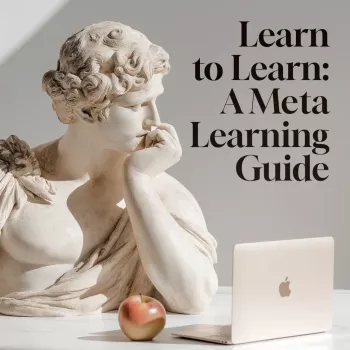
I spoke with Sarah, a college student who recently started using Learn to Learn: A Meta-Learning Guide. She shared how it completely changed her study routine.
“Before this guide, I was all over the place,” Sarah said.
“I didn’t feel like I was absorbing anything. But once I discovered I’m a visual learner, everything clicked. Using mind maps and color-coded notes helped me make connections I never could before.”
Sarah also found the learning style planner incredibly useful. “It helped me organize my study time based on what worked for me. Everything I needed was in one place.”
Thanks to the guide, Sarah’s grades have improved, and she now feels more confident in her studies. “I’m actually understanding the material and retaining it now,” she said.
Sarah’s story shows how identifying your learning style can make studying easier and more effective. If you’re ready to take control of your learning, Learn to Learn might be the perfect fit.
Understanding why is it important to know your learning style and discovering one is just the beginning. To truly optimize your study routine, it’s important to explore additional strategies and tools that can complement your learning journey.
For example, Learn to Learn emphasizes the importance of creating effective study habits, but there are many other resources that can help you build on that foundation.
For those interested in incorporating some fun and effective memory exercises into their routine, working memory exercises can be a game-changer.
These exercises are designed to improve your brain’s ability to retain and recall information, making your learning sessions even more effective.
Additionally, if managing your finances while studying feels overwhelming, this article on saving money might help you stay on track while focusing on your studies.
It offers practical tips to budget without feeling restricted, giving you more mental energy for your academic goals.
By combining these insights with your new understanding of your learning style, you’ll be on your way to mastering your studies more efficiently and effectively.
If you want your study sessions to actually work (and not just feel productive), focus on quality over hours. A smart structure beats a long, exhausted grind every time.
Start by setting clear goals for each session. Instead of saying, “I’ll study biology,” decide, “I’ll master chapters 3 and 4 key terms and complete 10 practice questions.” Specific tasks create momentum and make it easier to measure progress.
Use active recall instead of passive rereading. Close your notes and test yourself. Write down everything you remember, answer practice questions, or explain the topic out loud. If your brain has to retrieve the information, it strengthens the memory.
Space out your study time. Avoid cramming unless you enjoy unnecessary stress. Study in short, focused bursts with breaks in between. Your brain retains more when it gets recovery time.
Stay organized so you are not wasting energy searching for materials. Keep your notes, files, and deadlines clearly structured. A tidy system reduces friction and keeps you focused on learning, not logistics.
Prioritize sleep like it is part of your study plan. Because it is. Your brain consolidates information while you rest. Cutting sleep to study longer often backfires.
Finally, mix up your methods. Use flashcards, diagrams, practice questions, summaries, or teaching the material to someone else. Engaging multiple senses strengthens understanding and prevents boredom.
When you combine structure, testing, rest, and variety, studying becomes more efficient and way less draining. It stops feeling like survival mode and starts feeling strategic.

Understanding your learning style is an essential step toward academic success. It enables you to choose the right tools and methods, making studying more enjoyable and effective. Whether you’re a visual learner who loves diagrams or an auditory learner who excels in discussions, identifying your learning style is the first step in optimizing your study sessions.
[…] Our article on this topic offers valuable insights into aligning your learning habits with your goals, whether you’re tackling digital literacy or any other area of personal growth. […]




Leave a comment