How to Remember Things When Your Brain Feels Full but Life Keeps Asking for More

For many people, how to remember things becomes a daily frustration. You read, listen, plan, then forget. Names slip away. Details fade fast.
Your brain feels busy, yet unreliable. This article breaks down why memory fails and how to train it with practical systems that work in real life.
Memory does not improve through motivation alone. It improves through structure, repetition, and the right mental load. With the right approach, recall becomes a skill, not a guessing game.

Why Memory Feels Worse Than Before
Modern life overloads attention. Notifications interrupt thought. Multitasking breaks focus. Sleep often suffers. Stress crowds mental space. All these factors shrink recall speed and accuracy.
Memory relies on attention first. If focus breaks, storage fails. If storage fails, recall never happens. Many people blame their brain when the real issue sits in habits and systems.
Short-term memory feels fragile because it lacks reinforcement. Long-term memory fades without active recall. The brain needs cues, patterns, and repetition.
This explains why random tips fail. You need a repeatable framework that trains recall daily.
How to Train Your Memory Daily
Most people think memory is something you either have or you do not. In reality, it is a skill shaped by daily habits.
Just like strength or endurance, memory improves when you train it with intention and consistency.To make information stick, break it into small, manageable chunks instead of overwhelming your mind.
Add a visual image or personal link to anchor the material emotionally or contextually. With simple, deliberate practice each day, your memory becomes sharper, faster, and more reliable
- Choose one focus goal
- Remove distractions first
- Read once with full attention
- Close the source and recall from memory
How to Remember Things by Training Recall Instead of Rereading
Many people reread notes and hope memory sticks. That strategy wastes time. Recall improves when the brain works harder.
Active recall beats passive review every time. You test yourself before checking answers. This process strengthens memory pathways.
Spaced repetition also matters. You revisit material after short breaks, then longer ones. This timing forces the brain to rebuild memory instead of recognizing it.
Tools that combine recall and spacing work best. Structured exercises guide the brain through effort without overload.
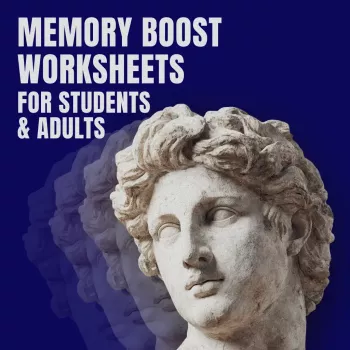
This approach sits at the core of the Memory Boost Worksheets for Students & Adults program. The worksheets focus on recall practice instead of reading loops. Each exercise targets real memory use cases.
The Role of Working Memory in Daily Recall
Working memory acts like a mental desk. It holds information you need right now. When the desk fills, items fall off.
Phone numbers, instructions, and conversations rely on working memory. Weak capacity leads to frequent forgetting.
Targeted working memory exercises expand this mental space. They train focus, sequencing, and information holding.
Improved working memory boosts learning speed. It also improves task completion and conversation recall.
The Memory Boost Worksheets for Students & Adults include progressive drills that increase difficulty gradually. This keeps effort high without triggering burnout.
How to Remember Things Under Stress and Pressure

Stress blocks recall fast. The brain shifts into survival mode. Memory access slows or stops.
You cannot remove stress completely. You can train memory to function despite it.
Breathing regulation helps. Slower breathing improves oxygen flow and attention. Short pauses before recall tasks reduce mental noise.
Chunking also works well. You group information into meaningful units. The brain recalls chunks faster than loose facts.
Visual association adds another layer. Images stick better than words alone. When you link data to visuals, recall improves.
The Memory Boost Worksheets for Students & Adults guide users through chunking and visual linking exercises. These techniques support recall even during pressure moments.
Effective brain training exercises share three traits:
- Clear objectives
- Active response
- Immediate feedback
How to Remember Things for Study, Work, and Life Tasks
Students face heavy information loads. Adults juggle tasks, names, and schedules. Memory demands differ, but principles stay the same.
For study, recall beats highlighting. Testing yourself reveals gaps quickly. Writing summaries from memory deepens retention.
For work, checklists reduce memory strain. External systems support recall. Memory works best when paired with structure.
For life tasks, routines help. Repeating actions at fixed times anchors memory cues. Many users ask how to improve memory without adding systems. Improvement comes from design, not effort alone.
The Memory Boost Worksheets for Students & Adults adapt across contexts. Students use them for exams. Adults use them for focus, recall, and clarity.
Common Memory Mistakes That Block Progress
Many people sabotage recall without noticing. They cram instead of spacing. They multitask while studying, rely on recognition instead of recall, skip sleep.
Memory needs recovery. Sleep consolidates learning. Without rest, practice loses power. Another mistake involves overloading sessions. Short sessions build strength faster.
Effective memory training respects brain limits while pushing growth. The Memory Boost Worksheets for Students & Adults avoid overload by design. Each worksheet focuses on one skill at a time.
How to Remember Things Long Term Without Burnout

Sustainable memory improvement feels calm, not stressful. You build habits, track progress or adjust difficulty. When memory improves, confidence rises. Tasks feel lighter. Focus lasts longer.
Long-term recall depends on reinforcement. You revisit information at smart intervals. You connect new data to existing knowledge.
This process becomes automatic with the right framework. Users often report faster recall, better focus, and reduced mental fatigue after consistent use of the Memory Boost Worksheets for Students & Adults. The benefits come from method, not magic.
A Real User’s Experience With Memory Training That Fits Real Life
I also spoke with a real user who has been using Memory Boost Worksheets for Students & Adults for a few months, and the conversation felt refreshingly honest.
She laughed and said, “I bought it thinking I’d use it once and forget about it, which would be ironic.” Instead, it became part of her routine.
She uses the worksheets with her morning coffee, usually for ten minutes. No pressure, no overthinking. What surprised her most was how practical everything felt. It didn’t feel like studying.
It felt more like training her brain to stay calm and actually hold onto information. Names started sticking. Grocery lists stayed in her head. Work meetings felt less chaotic.
She admitted she still forgets things sometimes, but now she notices progress instead of frustration. That shift changed everything.
The Memory Boost Worksheets for Students & Adults didn’t promise miracles. They offered a system she could realistically follow, even on busy days.
How to Remember Things When Your Routine Never Slows Down
Many people struggle with how to remember things because their days feel rushed and fragmented. The brain reacts badly to constant switching.
Focus breaks, then memory follows. A stable routine gives memory something to anchor to.
Morning recall practice works better than late-night cramming. Short sessions create less resistance and better consistency. Writing things down by hand improves retention faster than typing.
Saying information out loud adds another recall layer. These small habits stack over time. Memory improves when the brain knows what to expect.
One user shared that pairing her routine with Memory Boost Worksheets for Students & Adults helped her stay consistent without feeling overwhelmed. Structure removed the guesswork and saved mental energy.
Turning Forgetfulness Into a Skill You Can Control
Forgetfulness often feels random, but patterns always exist. People forget most when attention splits too thin. Clear focus builds stronger memory traces.
Recalling information without notes trains confidence and speed. Mistakes during recall actually help learning stick. The brain strengthens paths when it corrects itself.
Progress feels subtle at first, then suddenly obvious. You remember conversations more clearly. Tasks feel easier to finish. Mental clutter fades.
Memory training works best when it feels doable, not intense. When practice feels simple, habits last longer. Over time, recall shifts from effort to instinct, which changes how daily life feels.

Memory Training as a Life Skill
Memory affects confidence, learning, and productivity. It shapes conversations and decisions. It supports growth at any age.
When you understand how to remember things, you stop fighting your brain. You start training it. Effective memory training uses structure, recall, and repetition. Tools matter when they guide effort correctly.
If memory feels unreliable now, that does not define your future. Skills grow when practice matches how the brain works. With the right system, remembering becomes natural again.
Was this article helpful?
Yes
No
Leave a comment